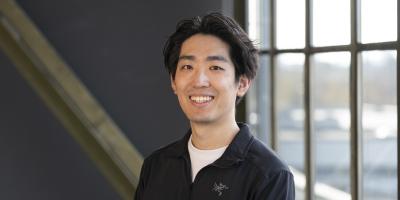
Lai holds a Master's degree in Geomatics from Lund University, Sweden. He is a PhD candidate at the Department of human geography and spatial planning at Utrecht University. His research focuses on addressing the uncertain geographic context problems in measuring the general external exposome. In particular, he will develop new dynamic measurements of environmental exposures along human mobility paths.
During his PhD in Exposome-NL at Utrecht University, Lai focused on improving mobility-based exposure assessment of the external exposome. He integrated human daily mobility data, including GPS trajectories and personal measurements, into exposure assessment frameworks to develop more accurate and human-centered approaches. His research demonstrated that simply incorporating locations beyond residence is not sufficient for improving the validity of exposure assessment, but incorporating contextual information of the micro-environment individuals have used or interacted with can be a promising way.
Exposome-NL enabled me to show that exposure assessment should account for micro-environmental contexts beyond spatial locations
Noreen Z. Siddiqui, Lai Wei, Joreintje D. Mackenbach, Marco Helbich, Joline W. J. Beulens
International Journal of Health Geographics (2024)
Lai Wei, Joreintje D. Mackenbach, Maartje P. Poelman, Roel Vermeulen, Marco Helbich
Health & Place (2023)
Lai Wei, Mei-Po Kwan, Roel Vermeulen, Marco Helbich
Journal of exposure science & environmental epidemiology (2024)

The environment we live in has a dominant impact on our health. It explains an estimated seventy percent of the chronic disease burden. Where we live, what we eat, how much we exercise, the air we breathe and whom we associate with; all of these environmental factors play a role. The combination of these factors over the life course is called the exposome. There is general (scientific) consensus that understanding more about the exposome will help explain the current burden of disease and that it provides entry points for prevention and ...
Read More